
An independent public resource on environmental noise pollution, including its sources, health impacts, history, and solutions.
Home / Noise Sources / Landscaping Equipment
Landscaping Equipment
Activities such as mowing lawns, trimming hedges, and collecting leaves can improve the appearance of a property and provide outdoor exercise. Historically, this work was done using manual tools such as push reel mowers and rakes.
Today, many homeowners rely on gas-powered landscaping equipment, including mowers, trimmers, hedge cutters, and leaf blowers. In addition, professional lawn care services often use commercial-grade equipment for routine maintenance. The widespread use of this machinery has significantly increased noise levels in residential areas.
Quieter alternatives are available. Electrically and battery-powered lawn mowers and trimmers generally produce far less noise, require less maintenance, and do not generate exhaust emissions. One limitation of corded electric equipment is the need to remain connected to a power source, which can be impractical for larger properties.
Homeowners seeking an ecological option may also consider modern push reel mowers. Recent designs are lighter, easier to maneuver, and more effective at cutting grass.
Leaf blowers present additional concerns beyond noise. Gas-powered models burn a mixed combination of gasoline and oil, producing toxic exhaust emissions. In addition, their high-velocity air streams can resuspend particulate matter such as dust, soil, pollen, mold spores, pesticides, fertilizers, and animal waste, dispersing these materials into the surrounding air.
Exposure to airborne particulates may pose increased risks for vulnerable populations. Young children, whose respiratory and immune systems are still developing, and older adults with existing health conditions may be more susceptible to adverse effects. Equipment operators may experience the greatest exposure due to prolonged proximity to both airborne debris and exhaust emissions.
Gas-powered landscaping equipment also contributes to air pollution due to inefficient combustion and the absence of modern emission controls. Small gasoline engines can emit disproportionately high levels of hydrocarbons and other pollutants relative to their size, particularly during extended or repeated use.
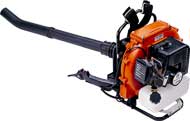
Leaf Blower
Leaf blowers generate high noise levels and can pose safety and health concerns in residential environments.
Industry
Manufacturers of leaf blowers include Black & Decker, Ryobi, Stihl, ECHO, Toro, Craftsman, and John Deere. Leaf blowers are widely sold through national home-improvement retailers and equipment dealers.
Manufacturers of landscaping equipment are represented by the Outdoor Power Equipment Institute (OPEI), a trade organization that participates in federal regulatory processes related to equipment emissions and noise standards. OPEI regularly submits comments and recommendations to the Environmental Protection Agency (EPA) regarding proposed and existing regulations.
The California Landscape Contractors Association (CLCA), a trade organization representing landscaping professionals, has published position statements acknowledging environmental and community concerns associated with leaf blower use while continuing to support their use within the industry.
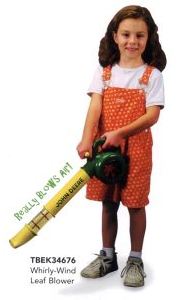
Whirly-Wind Leaf Blower Toy
John Deere licensed its brand for a toy leaf blower designed for children. The toy produces a stream of air to simulate the operation of a full-size leaf blower.
Legislation
A number of municipalities in California have enacted ordinances restricting the use of leaf blowers. Similar measures have also been adopted by municipalities in other parts of the United States, reflecting local responses to noise and environmental concerns associated with landscaping equipment.
See Also
Health
Research, public health findings, sound measurement, and the effects of noise on sleep, stress, hearing, cardiovascular health, and learning.
Copyright © 2004-2026 NoiseOFF. All rights reserved. Read our Privacy Policy.