
An independent public resource on environmental noise pollution, including its sources, health impacts, history, and solutions.
Home / Library / Boom Car Advertisements
Boom Car Advertisements
Car-audio advertisements that used aggressive, sexist, and antisocial themes to promote aftermarket sound systems. It provides insight into how boom-car culture was originally framed and encouraged.
The advertisements shown here are not aimed at consumers seeking improvements in sound quality or fidelity. Instead, they emphasize domination, intimidation, and public disruption, positioning extreme loudness as a form of identity and power rather than a byproduct of personal enjoyment.
In response to growing public concern, the Mobile Electronics Retailers Association (MERA), a trade organization representing car-audio retailers and installers, issued a position statement cautioning its members “not to use symbols, messages or suggest behavior that would adversely affect the industry.” MERA warned that irresponsible promotion could damage public perception and invite regulatory scrutiny.
Despite these warnings, the advertising campaigns continued. Taken together, these materials serve as evidence that excessive vehicle noise was not merely an unintended side effect of product use, but was actively promoted as a desirable outcome.
This archive can be referenced when lobbying for enforceable noise-control ordinances.
Car Sound Magazine
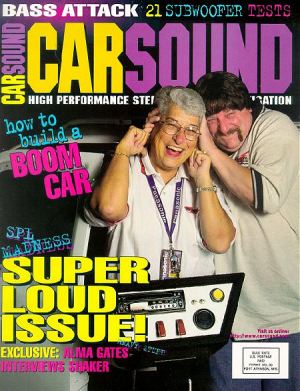
Car Sound & Performance Magazine was published by CMP Information, a company focused on trade and enthusiast publications. During this period, CMP operated alongside Primedia, then one of the largest publishers of automotive and enthusiast magazines and related websites. Together, these corporations had significant reach within markets associated with aftermarket car audio, performance modification, and related subcultures.
Advertisements promoting high-powered car audio systems also appeared across a wider range of men’s lifestyle magazines. This broad placement strategy extended the visibility of boom-car imagery and messaging beyond niche audio outlets into mainstream and youth-oriented media.
Boss Audio Systems
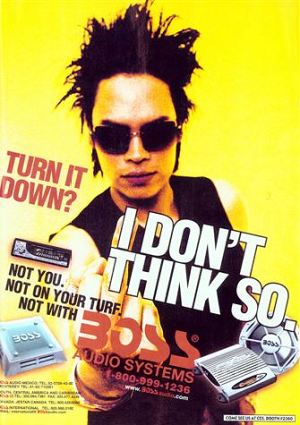
This advertisement from Boss Audio Systems depicts a young man making an obscene gesture toward the viewer, accompanied by the caption, “Turn it down? I don’t think so.”
The ad presents loud vehicle audio not as a byproduct of music enjoyment, but as a deliberate statement of confrontation. As such, it serves as a clear example of how antisocial behavior was, at times, directly incorporated into the marketing of aftermarket car audio products.
Bazooka Mobile Audio
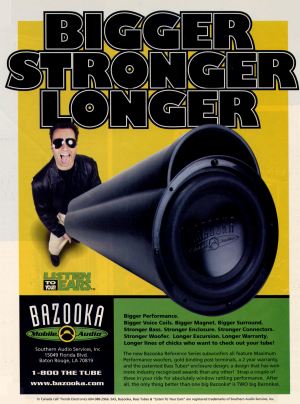
This advertisement from Bazooka Mobile Audio uses overt sexual innuendo to market a subwoofer, visually framing the product as a phallic symbol. The accompanying copy promises “bigger performance” and refers to “long lines of chicks who want to check out your tube,” explicitly linking product value to sexual dominance and attention.
The ad relies on crude metaphor and objectification to associate extreme audio output with masculinity and status. It provides another example of how aftermarket car-audio marketing frequently appealed to provocation and antisocial signaling.
Cerwin-Vega
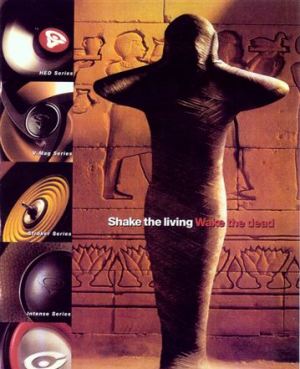
This advertisement from Cerwin-Vega depicts a mummy covering its ears, accompanied by the caption, “Shake the living — Wake the dead.”
Directed Electronics
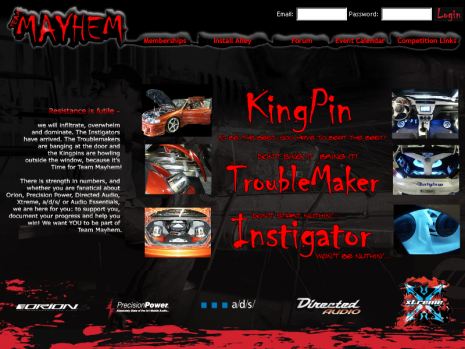
Directed Electronics marketed its “Directed Mayhem” brand using team names such as Kingpin, Troublemaker, and Instigator, positioning the products toward competitive boom-car culture. The branding emphasizes confrontation, dominance, and spectacle as defining elements of competition-level vehicle audio systems.
Directed Electronics was founded by Darrell Issa. Prior to entering public office, Issa served as chairman of the Consumer Electronics Association and participated in industry efforts opposing municipal noise ordinances. He later entered politics and served as a member of Congress representing California.
Hollywood Sound Labs
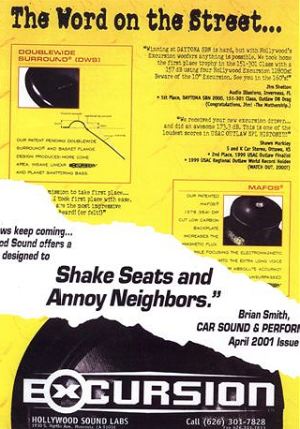
This advertisement from Hollywood Sound Labs features the tagline, “The word on the street… Shake seats and annoy neighbors.” The copy explicitly frames disturbance to surrounding residents as a selling point, presenting neighborhood impact as an intended and desirable outcome of product use.
JBL Car Audio
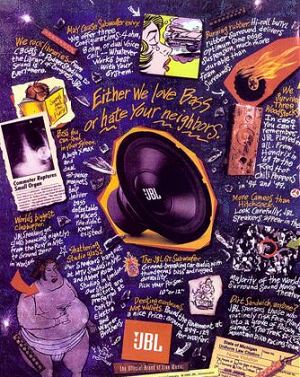
This advertisement from JBL Car Audio features the line, “Either we love bass or hate your neighbors.” The phrasing presents conflict as an acceptable, even humorous, consequence of extreme audio output.
JL Audio
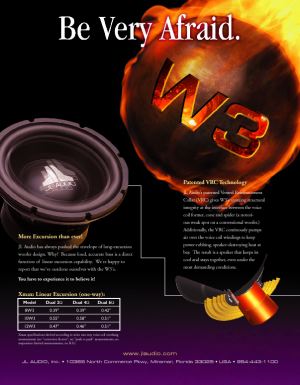
This advertisement from JL Audio features the tagline, “Be Very Afraid.” The phrase invokes intimidation as a central theme, suggesting that extreme audio output is intended to overwhelm or unsettle others.
The use of menace as a marketing device reinforces a broader pattern in which loud vehicle audio is framed not merely as entertainment, but as a source of power and disturbance directed outward into public space.
MA Audio
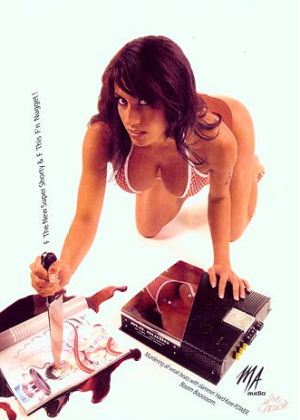
This advertisement from MA Audio relies on sexualized imagery and messaging to market its products. The presentation assumes that extreme vehicle audio can be used as a means of attracting women.
The ad reflects a broader trend in boom-car marketing in which objectification and provocation were used.
MB Quart
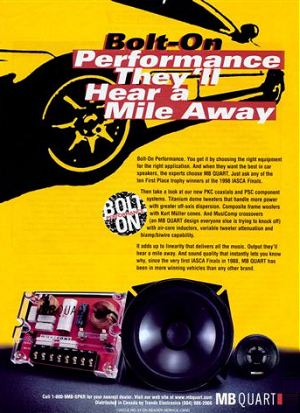
This advertisement from MB Quart uses the line, “Bolt-On Performance They’ll Hear a Mile Away.”
By highlighting how far the sound travels, the ad implicitly normalizes the impact of vehicle audio on surrounding neighborhoods, reinforcing the idea that disruption beyond the vehicle itself is an expected and desirable outcome.
Sony Car Audio
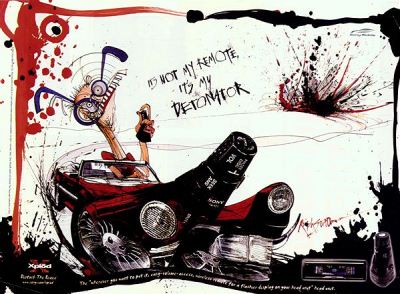
This advertisement equates high-powered car audio equipment with a weapon, using the line, “It’s not my remote, it’s my detonator.” The imagery and language draw a direct parallel between audio control and an explosive device.
The product line is marketed under the name X-Plod, reinforcing themes of force, impact, and destruction rather than sound quality or listening experience. The ad exemplifies how militarized and violent metaphors were used to promote extreme loudness.
Pioneer Electronics
Pioneer Electronics commissioned BBDO West, part of Omnicom Group Inc., to produce a marketing campaign built around the themes “Defy,” “Disrupt,” “Disturb,” and “Ignite.” An advertising trade publication offered the following assessment of the campaign:
“It may not be a club that the well-adjusted and highly successful people who read Adweek would care to join. But in the aggregate, even anti-social numskulls have plenty of discretionary income to spend. The ad prompts a reader to feel that Pioneer is part of a life that’s more exciting than the version he’s currently living. Actually, ‘reader’ may not be quite the right word, since each ad in the series carries a one-word text—the likes of ‘Defy,’ ‘Disrupt,’ and ‘Disturb.’ This presumably won’t overtax the target audience’s patience for reading, while the sense of the words assures these guys (accurately or otherwise) that they have a big effect on those around them.”
“The look of the ads seems rather gloomy, but I’m willing to believe that tuners will instead see it as conveying an air of menace—something to which they themselves may aspire. In sum, the ads give these guys a sense of importance, and they’ll feel disposed to reward Pioneer for doing so.”
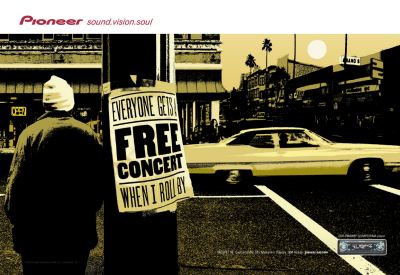
This image reflects how Pioneer Electronics chose to depict urban life within the campaign.
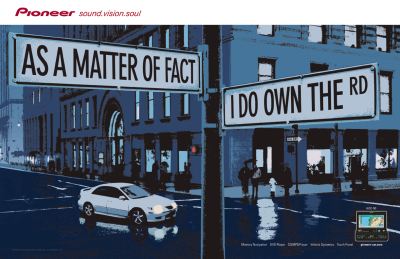
The advertisement adopts the voice of a lone boom-car owner driving through a rain-soaked street. The underlying corporate message, however, frames the roadway itself as territory claimed through sound and presence.
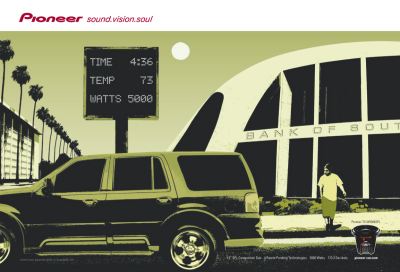
Imagery emphasizing urban decay and menace is used to reinforce themes of dominance and disruption.
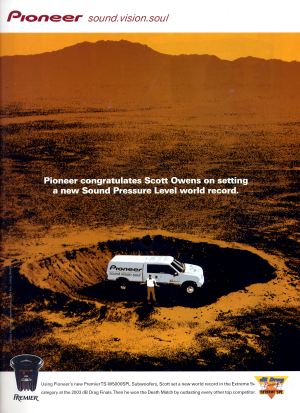
This ad celebrates success in a Sound Pressure Level (SPL) competition, reinforcing extreme loudness as a primary measure of achievement.
Pioneer Electronics “Disturb”
Pioneer Electronics marketing video titled, “Disturb”. A young man boasts about spending half of his inheritance money to purchase car audio equipment costing $30,000. Another brags that his boom car sets off car alarms and once caused a little boy to cry in the middle of the street.
Other Products
Kool Cigarettes
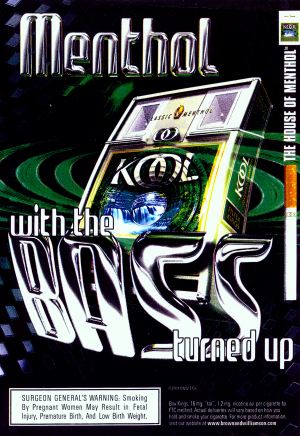
The use of boom-car imagery was not limited to the car-audio industry. This advertisement for Kool cigarettes visually presents a cigarette pack as a bass subwoofer.
Pepsi
Pepsi Vanilla Commercial
A Pepsi Vanilla promotional truck drives through an urban neighborhood while blasting amplified music. Background actors are shown reacting with excitement and approval, depicting excessive noise as entertaining and socially desirable.
The campaign was created by BBDO, part of Omnicom Group Inc., the same agency responsible for Pioneer Electronics’ “Defy, Disrupt, Disturb, Ignite” campaign.
As part of the promotion, Pepsi also toured a customized truck equipped with a high-wattage sound system and hydraulic components designed to visibly shake the vehicle. The campaign illustrates how mainstream brands pandered to boom-car culture by amplifying extreme loudness as a marketing device.
Toys “R” Us
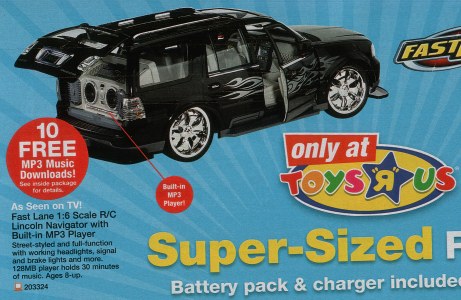
Toys “R” Us sold toy vehicles designed to imitate real-world boom cars, complete with exaggerated speakers, flashing lights, and sound effects. By marketing amplified car audio as a form of play, these products normalized disruptive noise behavior at an early age and framed excessive sound as socially acceptable.
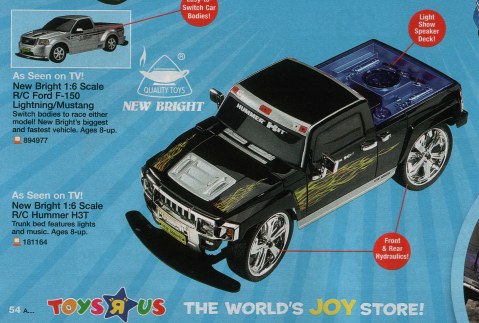
Unlike adult-targeted car audio advertising, these toys introduced the boom car aesthetic to children before they were capable of understanding its impact on others. The products blurred the line between harmless play and the promotion of antisocial behavior, reinforcing the idea that loud, intrusive sound is a source of fun rather than a public burden.
Sponsored Events & Competitions
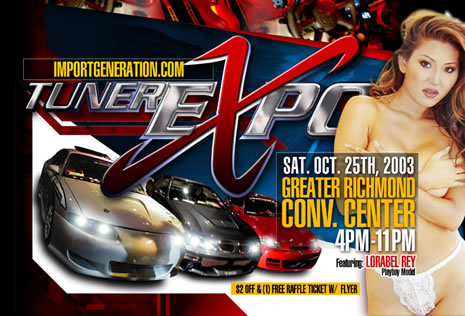
Promotional materials for car-audio events and competitions often rely on sexualized imagery to attract attendees.
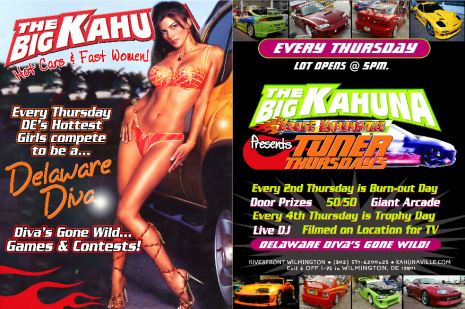
These events are commonly sponsored by segments of the car-audio and performance-vehicle industries and are held in communities across the country. They are designed to encourage participants to purchase or upgrade high-powered audio systems, framing noise as a competitive activity.
Event organizers have, at times, offered free admission to law enforcement personnel. This practice reflects an effort to normalize boom-car activity as a sanctioned sport or exhibition rather than a source of community disturbance.
Copyright © 2004-2026 NoiseOFF. All rights reserved. Read our Privacy Policy.